


Given the increasing frequency and severity of flood events, having a strong private flood policy is a strategic advantage.
Closing Thoughts & Next Step
Private Market Flood Insurance: Your Shield When the NFIP Isn’t Enough
When Flood Risk Hits, Private Market Solutions Can Save the Day
In flood-prone regions like the South Coast, Cape Cod, and coastal Massachusetts towns, relying solely on the federal flood program can leave you exposed. Private market flood insurance offers an alternative—often with more flexibility, faster claims, and higher limits. And during a government shutdown, when the National Flood Insurance Program (NFIP) may pause new policies or renewals, private flood becomes an essential fallback.
Below, we’ll explain what private flood is, which types of properties and industries most need it, real-world claim scenarios, and why it’s especially critical when the government halts operations.
What Is Private Market Flood Insurance?
Private flood insurance (also called “private flood” or “private market flood”) is flood coverage issued by private insurers rather than the federal NFIP. It’s underwritten based on risk modeling, not strictly bound by NFIP rules.
If you want, you can refer to more details on this coverage at hcandcinsurance.com/what-is-private-flood (that’s your agency’s reference).
Some key differentiators of private flood vs NFIP:
Higher coverage limits: Private policies often allow you to insure the full replacement cost of your building and contents, beyond the NFIP caps.
Flexible coverage terms: Private insurers may offer Rate-Lock options, assignable policies (so a buyer can take over the policy), or customized endorsements.
Faster claims and underwriting: Since there’s no need to wait on federal processing, private companies may issue policies and settle claims more quickly.
More privacy and flexibility: Private insurers may accept properties that NFIP declines or restricts.
The trade-offs: private insurers can adjust premiums, non-renew, or decline policies if the risk becomes too high. NFIP, being backed by the federal government, is more stable but also more rigid and constrained.
Why Private Flood Insurance Matters Now — Especially During a Government Shutdown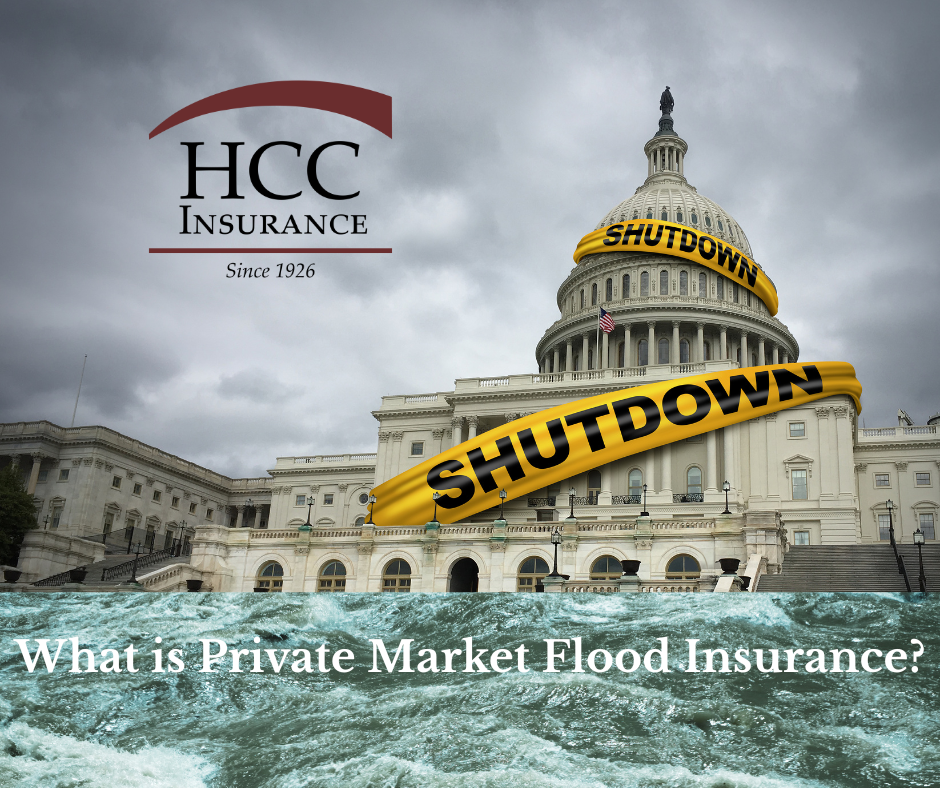
The NFIP is subject to federal authorization. In a government shutdown, FEMA cannot issue new flood insurance contracts or approve endorsements.
What Happens to NFIP During a Shutdown?
No new policies or renewals: The NFIP cannot legally enter into new contracts while Congress hasn't appropriated funds.
Policy changes and increases halted: You typically can’t add coverage or change endorsements during the lull.
Claims on existing policies still paid: In past shutdowns, existing NFIP policies continued to process claims, but delays may occur and resources may be more constrained.
That means if you delay acting, you could find yourself unable to get flood coverage when you most need it—leaving your property exposed.
The Private Market as a Solution
Because private flood insurers operate outside federal funding constraints, they can continue writing new policies during a shutdown. That provides critical continuity, especially for:
Real estate transactions that require flood coverage
Mortgage closings where lenders demand proof of flood insurance
Businesses that can’t afford a lapse in coverage
In other words, private flood insurance acts as a safety net when the NFIP is in limbo.
Recent articles warn: a lapse in the NFIP amid peak flood season could freeze real estate deals and disrupt business contracts.
Industries and Properties That Benefit from Private Flood
Private flood isn’t just for coastal homes—many industries and property types face elevated flood risk and may not be fully covered by NFIP. Here are sectors where private flood is especially valuable:
Residential & High-Value Homes
Homes exceeding NFIP coverage caps, waterfront properties, or those with expensive upgrades find private policies more fitting.
Commercial Real Estate & Rental Properties
Multi-unit buildings, office complexes, or retail spaces often require higher limits and custom terms.
Contractors, Builders & Developers
Spec homes, model homes, or land improvements need transitional protection while waiting for permanent coverage.
Hospitality & Tourism
Hotels, inns, restaurants in flood-prone zones need continuity and swift recovery to maintain reputation and operations.
Municipal & Institutional Buildings
Schools, municipal offices, libraries, and community centers may require high-value flood protection beyond NFIP limits.
Businesses with Equipment, Inventory & Critical Assets
Warehouses, storage facilities, biotech labs—when flood damage to equipment is crippling, private policies allow more generous coverage.
Real-World Claim Scenarios
To illustrate how private flood insurance works in practice, here are some hypothetical scenarios:
Luxury Home Over Cap: A Cape Cod waterfront home suffers flooding beyond the NFIP’s $250,000 limit. A private flood policy covers the full replacement cost.
Restaurant Flood: A sudden storm causes water intrusion in a seaside restaurant. Private coverage pays for structural repairs, inventory replacement, and business interruption.
Developer Model Home: A home under construction floods. Private flood coverage helps manage losses until the property is insured permanently.
Commercial Supply Depot: An inland storage facility experiences flood damage from heavy rainfall and river overflow. Private flood insurance covers equipment and structural damage.
These scenarios show how private flood can give flexibility and protection where NFIP limits and terms inevitably fall short.
How Private Flood Works Step-by-Step
Underwriting & Risk Assessment
Private insurers use advanced flood modeling and property data to determine risk and pricing, sometimes more precisely than FEMA maps.Policy Structure & Terms
You choose building, contents, and often optional endorsements like loss of use, additional living expenses, and sewer backup.Claims Handling Process
File immediately after damage, document losses, coordinate with adjusters, and expect a more streamlined process than government programs.Renewals & Adjustments
Because private insurers can decline renewal or adjust pricing, it’s essential to maintain good risk management and communication.
Choosing the Right Private Flood Policy
When evaluating private flood options, consider:
Carrier Financial Strength — Use A-rated or above insurers.
Coverage Limits & Flexibility — Ensure limits exceed your total exposure.
Endorsements & Add-Ons — Look for loss-of-use, excess flood, and building plus contents coverage.
Rate Stability & Possibility for Renewal — Some insurers lock rates, others reprice annually.
Lender Acceptance — Confirm that your mortgage lender accepts the policy.
Claims Speed & Service — Faster response is a key advantage of private flood.
Exclusions — Read carefully for limitations or conditions.
You can compare private flood coverage and details at hcandcinsurance.com/what-is-private-flood to see how we position these policies for clients.
Why Private Flood Is Part of a Strong Risk Strategy
Flood risk is only rising—especially in coastal New England. Private flood insurance complements other coverages like:
Homeowners or Commercial Property Insurance (which typically excludes flood)
Umbrella or Excess Liability (does not cover flood)
General Liability / Workers’ Comp / Auto Insurance (none cover flood)
Given the increasing frequency and severity of flood events, having a strong private flood policy is a strategic advantage.
Why Choose HCC?
When it comes to flood protection, experience and choice matter. At HCC Insurance, we’ve been writing flood insurance for nearly 100 years. Over that time, we’ve become true specialists in the field, building deep expertise and strong carrier relationships that allow us to serve clients better than anyone else.
Unlike agencies limited to the NFIP, HCC partners with over two dozen flood markets—meaning we shop the entire landscape to find the coverage that truly fits your needs. And with the addition of our new private flood market (exclusive to HCC), many of our clients are now securing flood protection for hundreds of dollars instead of thousands. That’s real savings without sacrificing quality or security.
Whether you need protection for a Cape Cod waterfront property, a multi-family in New Bedford, or a business in Fall River, we combine history, expertise, and choice to deliver flood solutions that stand the test of time. With HCC, you don’t just get a policy—you get peace of mind backed by a century of commitment.
Closing Thoughts & Next Steps
Flood protection isn’t optional in coastal regions—it’s essential. Private market flood insurance offers a flexible, responsive alternative to the limitations of the NFIP. And during periods of government shutdown or NFIP lapse, it becomes your primary defense.
If you’re in Southeastern Massachusetts—whether in New Bedford, Falmouth, Wareham, Cape Cod, or surrounding areas—and want to explore private flood coverage, let’s talk. We can review your exposure, compare carrier options, and help secure private flood coverage (and have it ready long before the next storm surge).
📞 Call HCC Insurance at (508) 997-3321
💻 Or visit hcandcinsurance.com/what-is-private-flood to learn more and request a quote.
Because when it comes to protecting your home or business from flooding—Honestly, It’s the Best Policy.